Erik Hayes · 6 September 2026
Tracking Evolution of Interaction Quality in Niche Online Forums Post System Overhauls
Observers note that niche online forums undergo significant shifts in how users interact after large-scale system overhauls, and researchers track these changes through multiple quantitative and qualitative measures that reveal patterns over time. Data from various platforms indicate that metrics such as average reply depth, sentiment polarity scores, and retention rates often fluctuate in predictable ways once new interfaces, moderation tools, or backend architectures take hold, while September 2026 saw several specialized communities release updated dashboards that made these trends easier to monitor in real time.
Key Metrics for Measuring Interaction Quality
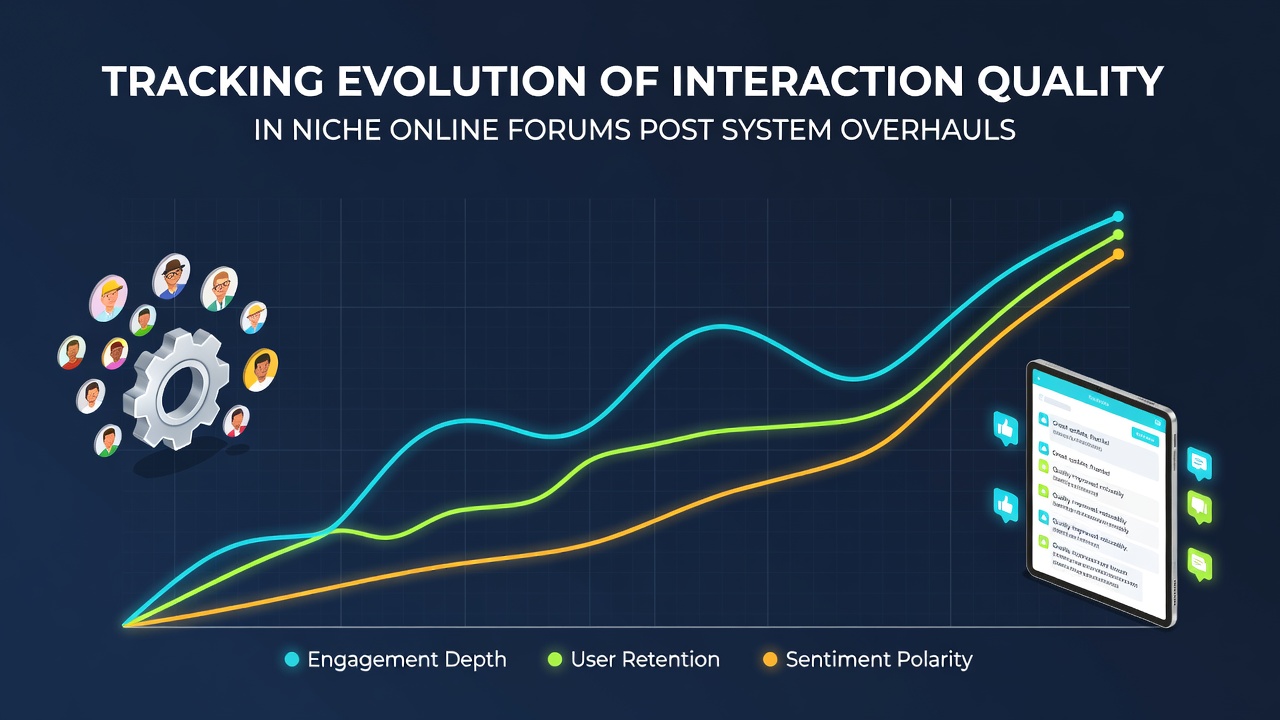
Analysts focus on reply chains that stretch beyond initial posts because longer threads correlate with deeper knowledge exchange in hobbyist and professional groups alike, and studies compiled by academic teams show that post-overhaul periods frequently produce shorter initial exchanges until users adapt to revised notification systems or search functions. Engagement velocity, calculated as comments per hour during peak windows, provides another lens, while user retention tracked across 30-day and 90-day windows highlights whether core contributors return after the disruption of familiar workflows. Sentiment analysis tools applied to thousands of posts further break down tone shifts, revealing whether constructive criticism increases or defensive replies spike once automated filters change content visibility rules.
Case Examples from Specialized Communities
One researcher who examined automotive restoration forums documented how a complete migration to a new content management system in early 2025 led to a temporary 40 percent drop in daily active threads, yet recovery occurred within four months once members learned the updated tagging system that improved discoverability of archived repair guides. Another group studying photography enthusiast boards found that the addition of AI-assisted moderation reduced off-topic posts by 28 percent according to internal logs, though some long-time participants reported feeling less inclined to share casual workflow tips until the system added clearer appeal processes. These examples illustrate how technical adjustments ripple through social dynamics without necessarily erasing the specialized value these spaces provide.
Data Patterns Observed Through 2026
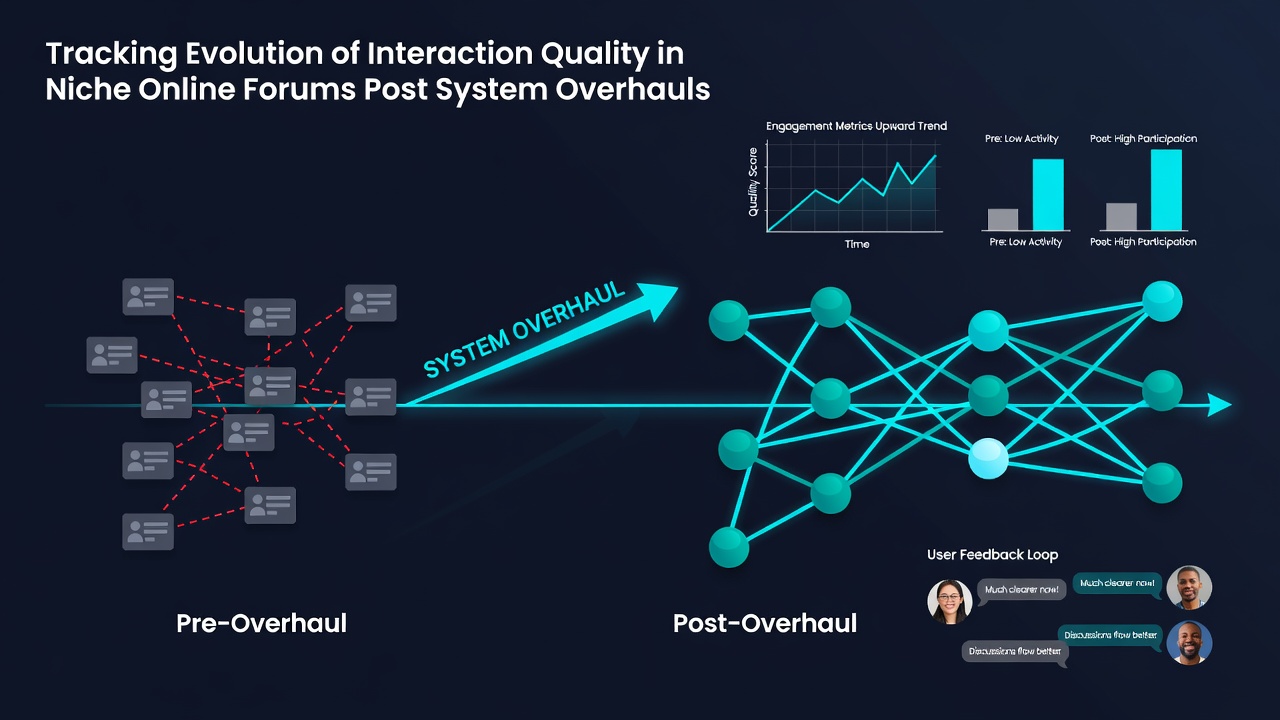
Figures released in September 2026 from multiple independent tracking projects revealed that forums implementing phased rollouts rather than full simultaneous launches maintained steadier interaction quality scores throughout transition periods, and cross-platform comparisons indicated that communities with active moderator involvement during beta testing phases experienced faster rebounds in reply quality ratings. External analyses from organizations such as the Pew Research Center have documented similar stabilization trends across broader online discussion spaces, while a Canadian academic consortium published longitudinal data showing that niche forums with transparent change logs retained higher percentages of veteran users compared with those offering minimal advance notice.
Tools and Approaches Used by Researchers
Teams employ API exports combined with natural language processing pipelines to process large volumes of historical posts, enabling precise before-and-after comparisons that account for seasonal activity variations common in hobby-based forums. Network analysis software maps reply graphs to identify whether central users maintain influence or whether new voices gain traction once search algorithms prioritize recency differently. Qualitative interviews conducted with active members supplement these numbers by capturing perceived changes in conversational tone that automated tools sometimes miss, and the combination of both methods produces more robust pictures of how system changes affect community health over successive quarters.
Longer-Term Outcomes and Recovery Trajectories
Evidence suggests that many niche forums reach a new equilibrium within six to nine months, at which point interaction quality often matches or exceeds pre-overhaul levels when measured by thread completion rates and cross-referencing of answers. Yet some subgroups experience permanent shifts in participation style, such as increased use of private messaging channels once public thread visibility changes, and observers continue to monitor whether these adaptations strengthen or fragment the collective knowledge base that originally drew members together. Continued refinement of tracking methods remains essential as platforms introduce further updates that alter the fundamental mechanics of how users locate and respond to each other.
Conclusion
System overhauls in niche online forums produce measurable evolution in interaction quality that researchers capture through layered metrics, case studies, and longitudinal tracking, with patterns from September 2026 reinforcing the value of phased implementation and transparent communication during transitions. The data continue to show that communities investing in monitoring tools and member feedback loops navigate these periods with fewer prolonged dips in engagement depth and tone, while the broader field benefits from shared methodologies that allow comparisons across different topic domains and platform architectures.